- Creative
- 3 min read
The Creative Advantage, Part 3 of 4
Your customers don't care about your business

Nobody wakes up wondering how long you have been in business.
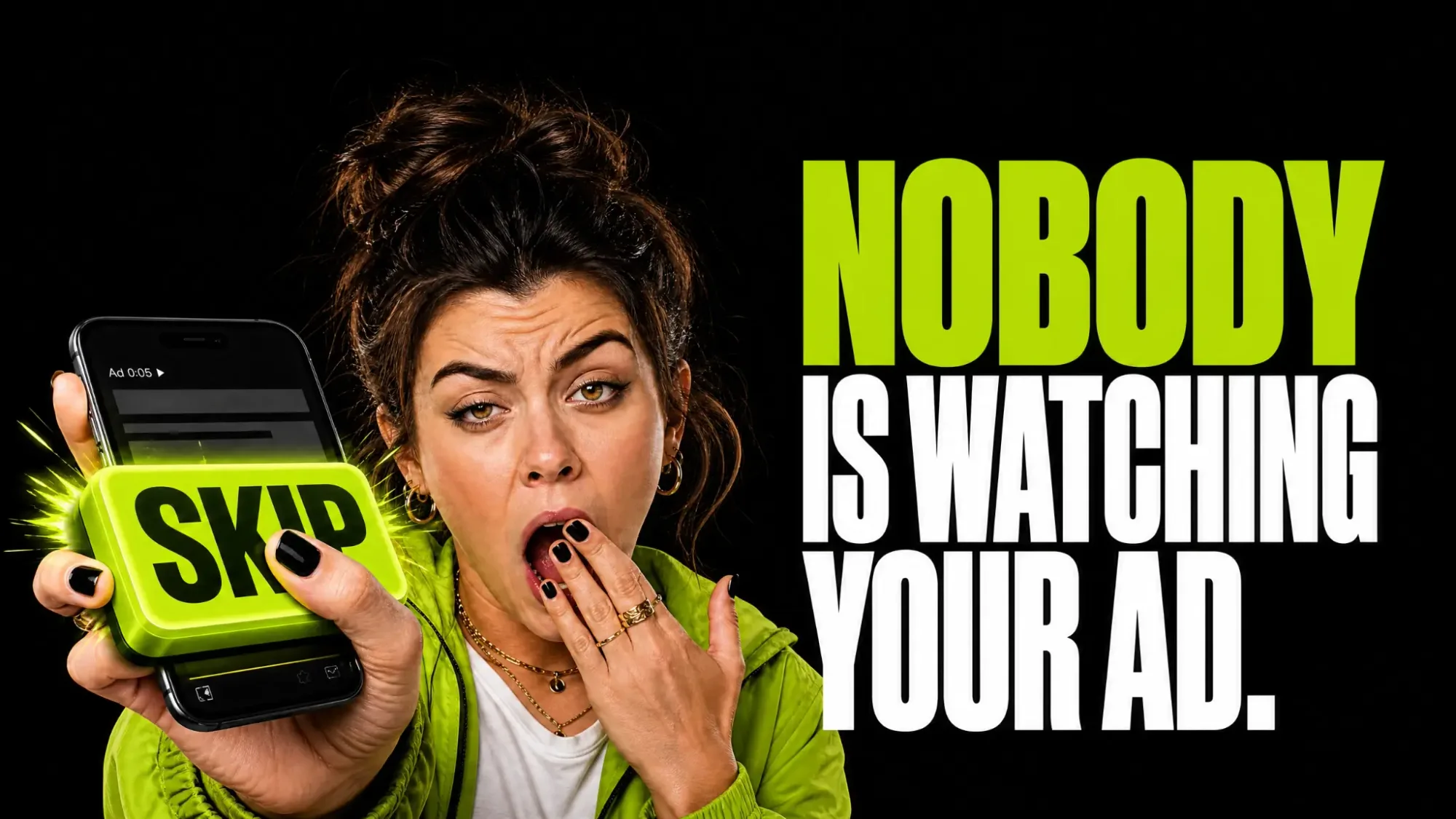
Nobody scrolls their feed hoping to learn about your product range, your award wins or your brand-new premises. Your audience is busy with their own lives and their own problems. Your ad is an interruption they will tolerate for only a moment before deciding whether to keep watching or keep scrolling.
That moment is the whole game. Most ads lose it the same way: by talking about the advertiser instead of the audience.
The most common mistake in advertising
Open any feed and you will see it. Ads that lead with the company name. Ads that list features nobody asked about. Ads that celebrate the years in business, the trophies on the shelf or the size of the showroom. Ads that say look at us to people who were never looking in the first place.
It is an easy trap because those things genuinely matter inside the business. You are proud of them and you should be. But pride is not a hook.
Your audience has one question when your ad interrupts them: what is in this for me?
If the answer does not arrive quickly, they are gone.
Flip the script
Audience-first creative begins with a different question. Not what do we want to say? but what does our audience need to hear?
| Advertiser-first creative | Audience-first creative |
|---|---|
| Opens with the company name | Opens with the audience's problem or desire |
| Lists features and specifications | Shows the outcome the audience wants |
| Talks about us, we and our | Talks about you and your |
| Asks for the sale immediately | Offers relevance, value or entertainment first |
| Uses one generic message for everyone | Adapts the message to the audience and context |
| Is judged by whether the boardroom likes it | Is judged by whether the audience responds |
Compare two openings for the same plumbing business.
Smith & Sons Plumbing. Servicing Cairns since 1987.
Tired of tradies who do not show up?
The first is about the advertiser. The second is about the reader. It earns the next few seconds of attention, which gives the brand a chance to become the answer.
Relevance changes the response
Nielsen found that 68% of surveyed consumers were at least somewhat likely to buy when a brand engaged with them in a personalised way. The same study found 63% were at least somewhat likely to buy when a brand provided relevant, valuable content beyond the product pitch.
The point is not that every ad needs to become a tutorial. The point is that attention is more likely when people recognise something useful, timely or true about their own lives.
Your brand still belongs in the advertising. It earns its place by being the answer to the audience’s problem rather than the opening line.
Make the audience the main character
Before approving the next campaign, look at it through the customer’s eyes.
Can they recognise themselves in the first moment? Does the message describe a problem they already feel? Is the outcome clear? Does the language sound like a person or a board paper?
If the creative only makes sense from inside the business, it is not finished.
The final post in this series turns that principle into a practical five-part creative checklist.
Next in the series
How to Make an Ad Nobody Skips.
AdaptAd creates advertising around the audience you need to reach, not the internal language of the business. Talk to us at adaptad.com.au or email hello@adaptad.com.au.
References
Nielsen, Study Reveals Majority of Consumers Actively Avoid Ads: https://www.nielsen.com/news-center/2023/nielsen-study-reveals-majority-of-consumers-actively-avoid-ads-across-podcasts-streaming-and-live-tv-platforms/